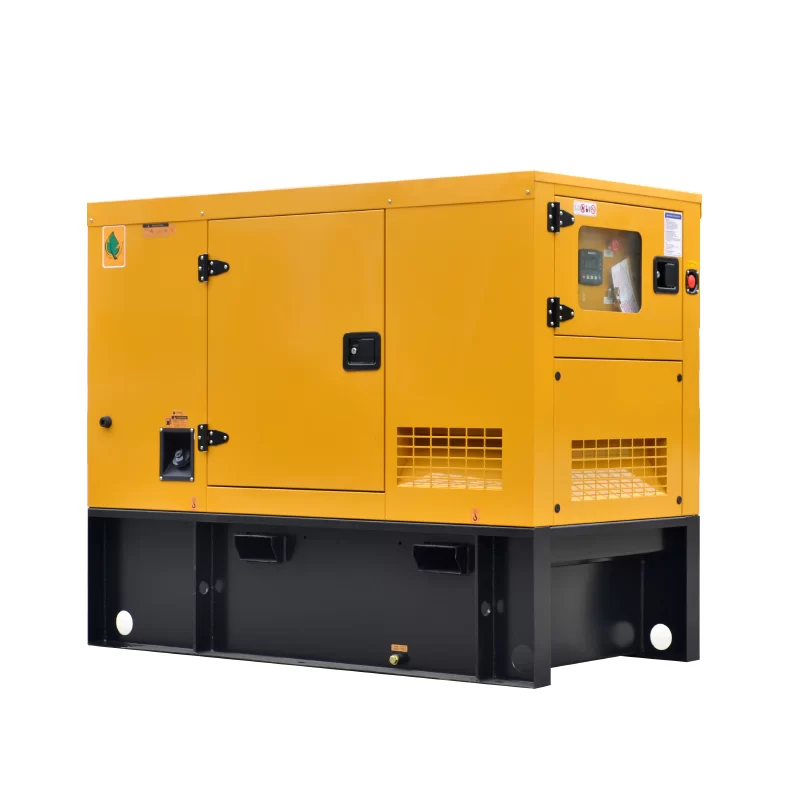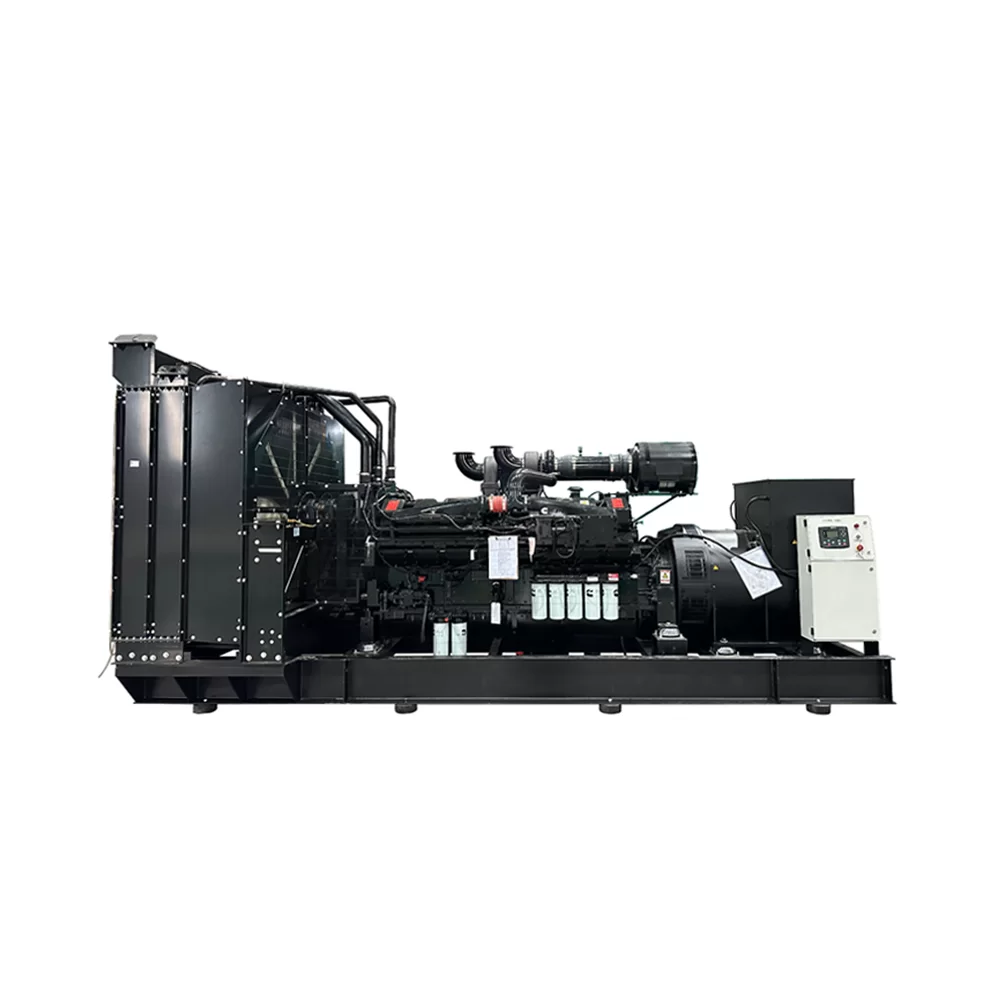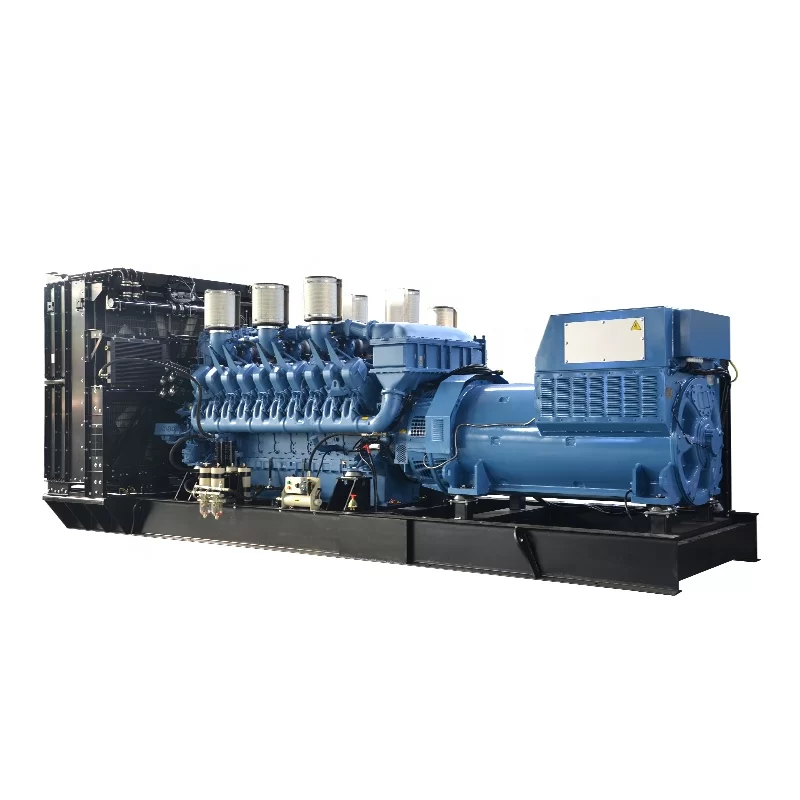
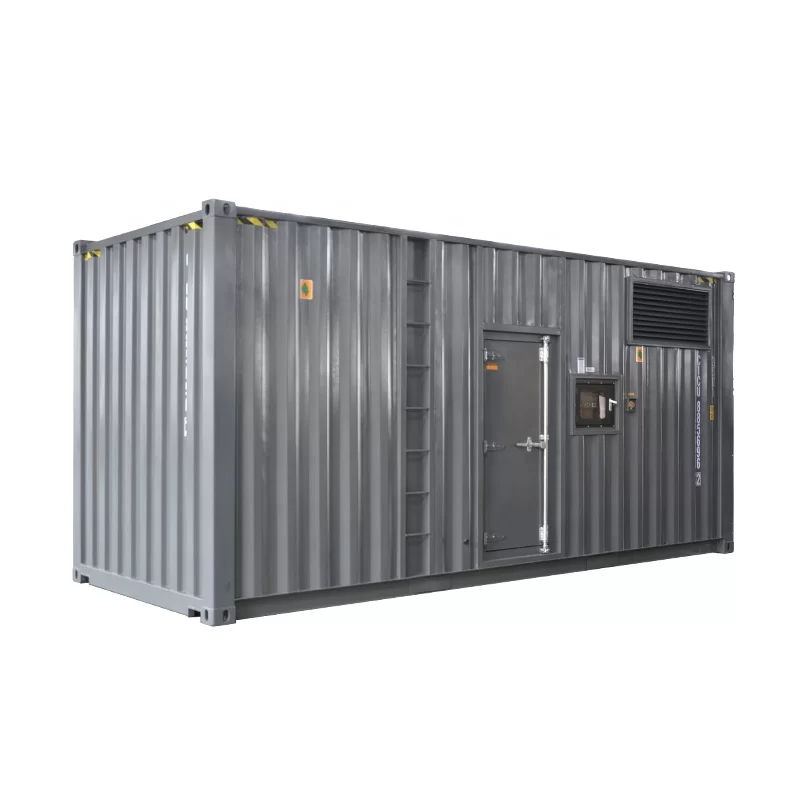
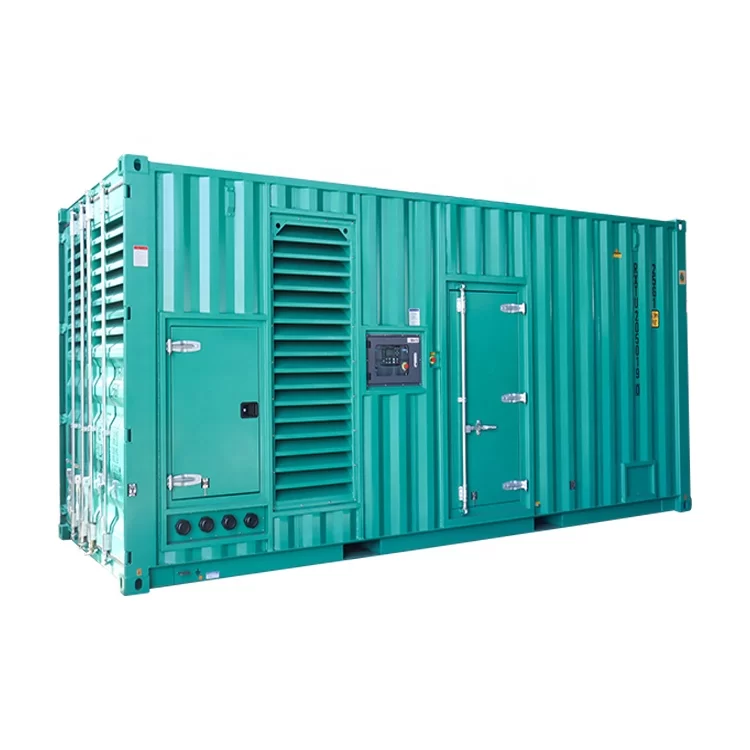
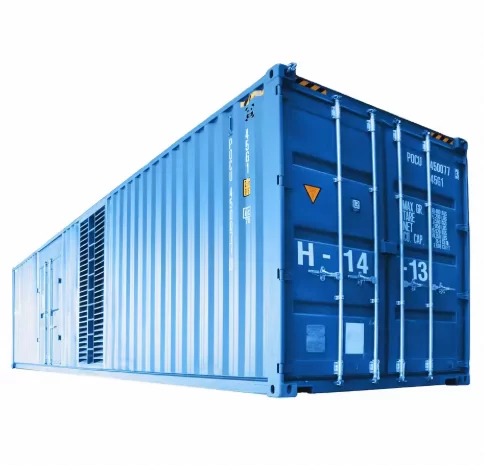
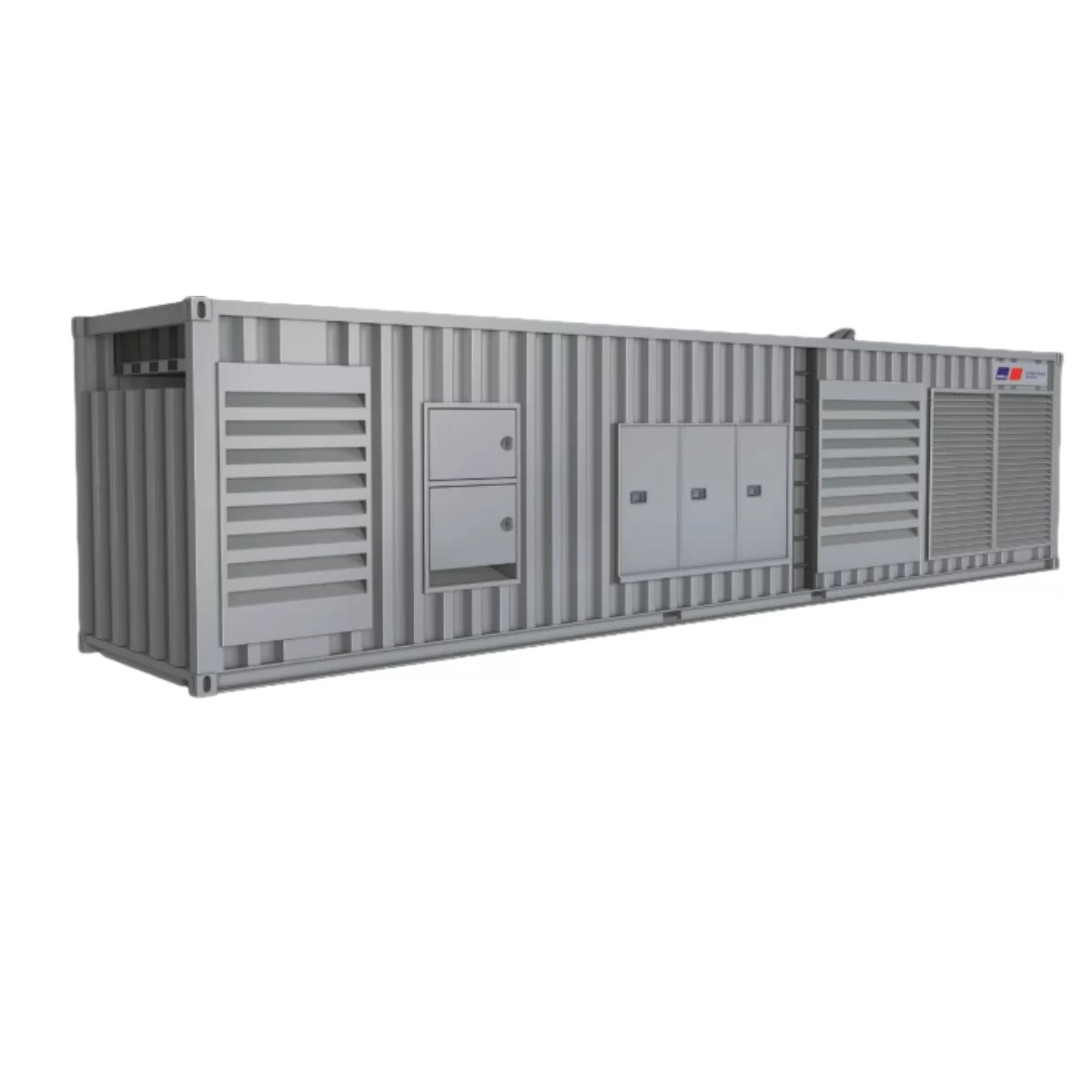
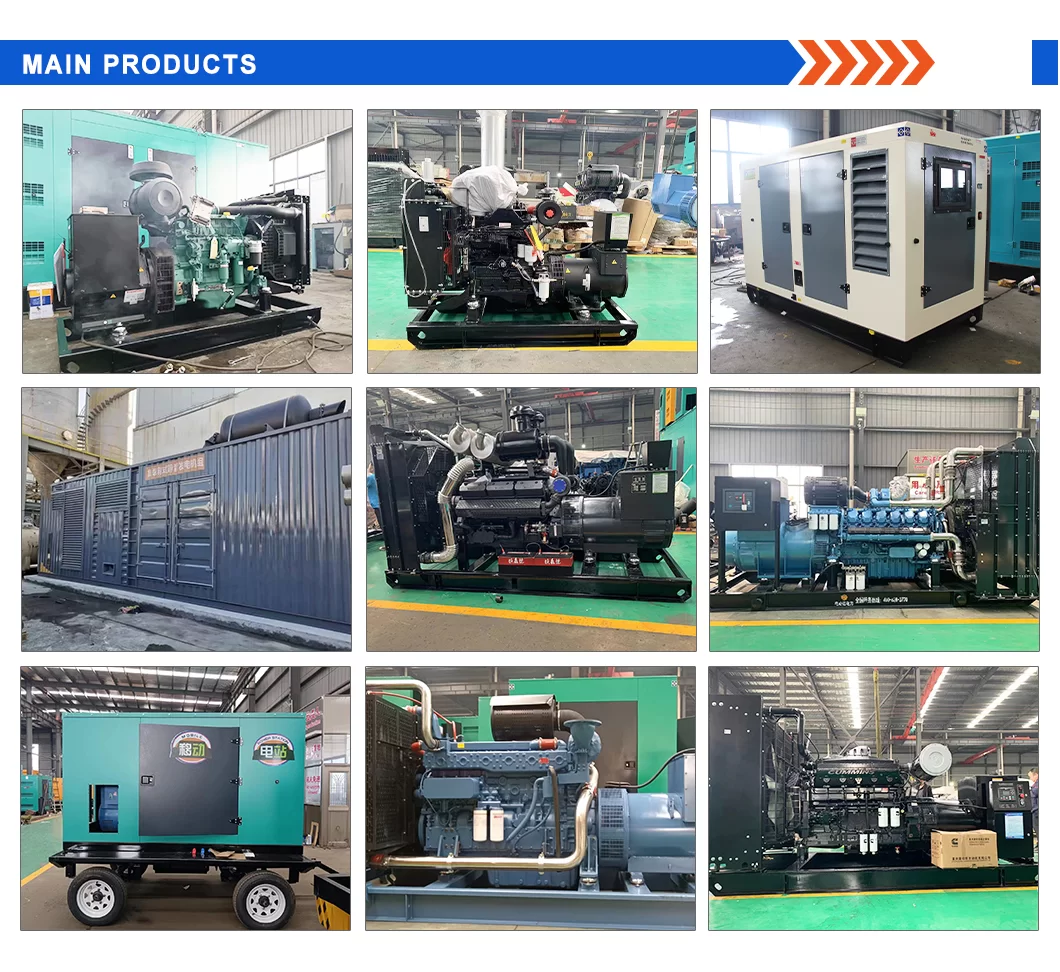
An industrial containerized diesel generator set delivers turnkey prime and standby power in demanding locations. Housed in a custom-engineered, weatherproof ISO-standard steel container, it integrates a continuous-rated heavy-duty diesel engine (e.g., 1000 kW to 2500 kW), a high-efficiency alternator, paralleling control switchgear, bulk fuel subsystems, and advanced exhaust after-treatment.
An industrial containerized diesel generator set delivers turnkey prime and standby power in demanding locations. Housed in a custom-engineered, weatherproof ISO-standard steel container, it integrates a continuous-rated heavy-duty diesel engine (e.g., 1000 kW to 2500 kW), a high-efficiency alternator, paralleling control switchgear, bulk fuel subsystems, and advanced exhaust after-treatment.
The key advantages of this utility-grade design are multifaceted, with superior environmental protection and continuous all-weather operability at the core. The reinforced ISO steel container structure provides a high-security enclosure for critical high-voltage components, protecting against physical impact, unauthorized access, and harsh industrial conditions. It delivers certified IP54/IP55 protection against extreme climatic threats—torrential rain, desert sandstorms, sub-zero temperatures, and tropical humidity—ensuring reliable cold starts and uninterrupted prime power where standard open-skid units would fail. This built-in durability directly supports extended asset lifecycle and minimized OPEX (Operational Expenditure).
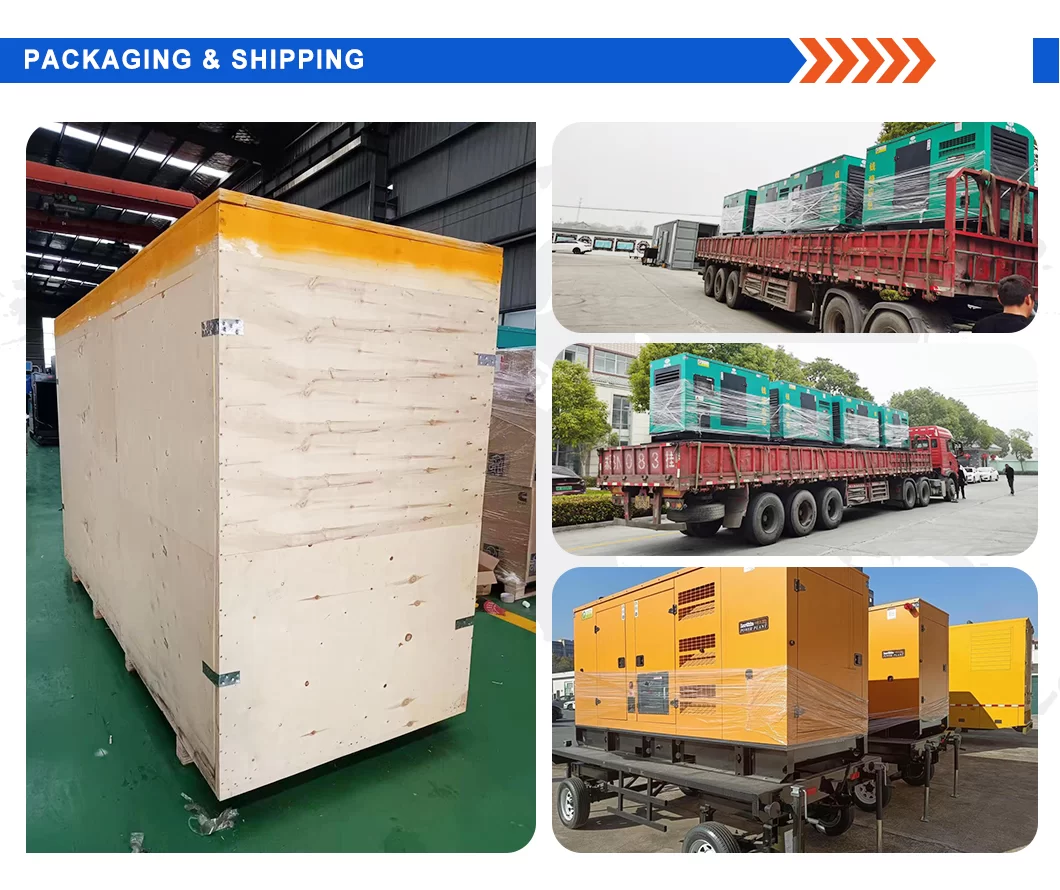
Secondly, containerized gensets excel in rapid site deployment and global logistical optimization. As a fully self-contained power plant built to ISO shipping dimensions (20ft, 40ft, or 40ft HQ), it can be transported worldwide using standard multimodal logistics (freight, rail, or sea) without requiring costly dismantling. On arrival at the project site, it functions as a true “plug-and-play” module. Minimal site preparation is required: connect the external bulk fuel source and the main load distribution cables. This significantly reduces CAPEX, installation complexity, and commissioning time, making it a definitive power solution for EPC contractors, mining camps, and critical infrastructure projects.
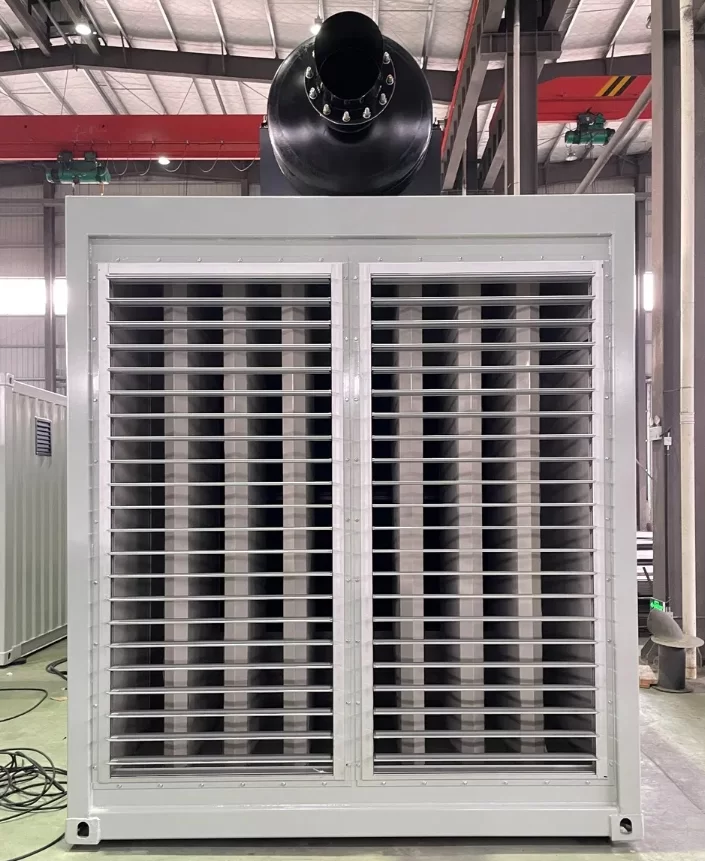
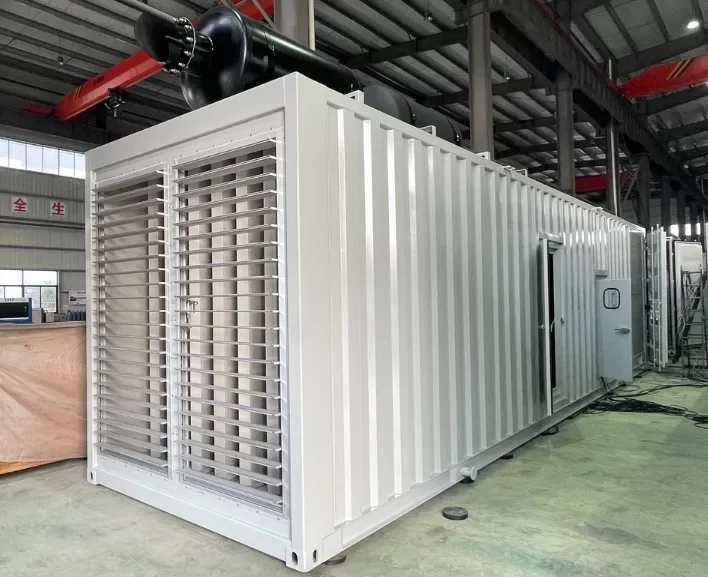
Stringent environmental compliance and advanced acoustic engineering are further hallmarks of our systems. Modern megawatt units use proprietary sound-attenuating materials, residential-grade silencers, and baffled airflow systems to achieve very low noise emissions (often <75 dB(A) @ 7 meters) for high-capacity industrial equipment. In addition, systems can be configured with integrated SCR (Selective Catalytic Reduction) and DPF (Diesel Particulate Filters) to meet or exceed rigorous international emission requirements, including EPA Tier 4 Final and EU Stage V.
Finally, precision of factory-grade integration ensures error-free site commissioning. All high-voltage internal components—from the multi-point vibration-isolated chassis to the fully partitioned synchronizing switchgear—are wired, load-bank tested, and certified before leaving our facility. The centralized digital master control system features a ruggedized HMI touchscreen with deep SCADA integration, enabling remote fleet monitoring, automated load shedding, and predictive maintenance diagnostics. This level of uncompromising engineering delivers mission-critical reliability, operational safety, and complete grid independence.
In summary, our industrial containerized diesel generators are the optimal procurement choice for heavy industry customers who require zero-downtime reliability, maximum asset security, and uncompromising power scalability anywhere in the world.
| Technical Parameter | Specification Details |
|---|---|
| Prime Power Range (PRP) | 1000 kW / 1250 kVA - 2500 kW / 3125 kVA |
| Rated Voltage & Frequency | 400V/230V, 380V/220V (50Hz) | 480V/277V (60Hz) |
| Enclosure Type | ISO 20ft / 40ft / 40ft HQ Standard Steel Container |
| Protection Grade | IP54 / IP55 Weatherproof & Sound-attenuated |
| Emissions Standard | Unregulated, EU Stage II/III, EPA Tier 3 / Tier 4 Final |
A containerized diesel power plant goes beyond standard backup generators. It is a fully engineered, multi-megawatt generation facility enclosed in a ruggedized shipping footprint.
The structural steel enclosure provides maximum protection against industrial wear and challenging terrains, while significantly reducing logistics costs. These units are designed for rapid commissioning, enabling heavy industries to avoid extensive concrete site preparation.
At its core, a heavy-duty industrial engine directly couples with a high-efficiency synchronous alternator to deliver stable, low-harmonic commercial power. Deep-sea or ComAp intelligent controllers manage grid synchronization and base-load operation seamlessly.
Turnkey containerized generators support off-grid mining operations, hyperscale data centers, EPC construction megaprojects, and national utility grid applications. Modular scalability ensures that as your project’s energy demand increases, your power infrastructure scales smoothly.
Mission-critical operations cannot tolerate voltage dips or blackouts. A prime-rated containerized generator safeguards productivity by delivering uninterrupted, clean power within a fortified, mobile chassis.
The custom-modified ISO enclosure isolates internal components from corrosive saline coastal air, heavy dust conditions typical of quarrying, and extreme ambient thermal loads. This ensures reliable 24/7 continuous operation for demanding sectors such as petrochemical processing and remote drilling.
Logistical efficiency is a major purchasing driver. Built for standard intermodal freight protocols, these systems eliminate the need for specialized heavy-haul permits.
Security is essential for remote assets. Integrated tamper-proof hardware, concealed exhaust routing, and industrial locksets help prevent fuel theft and unauthorized control access on unattended sites.
For large-scale B2B applications, these systems represent a highly predictable CAPEX investment with a supported ROI through sustained uptime.
Selecting the correct architecture—containerized vs. open-skid—is critical for overall project lifecycle cost performance.
A containerized genset removes the need to construct dedicated concrete powerhouses. It provides built-in weatherproofing, advanced acoustic baffling, and maximum asset security, making it the preferred choice for outdoor use, extreme environments, and temporary large-scale deployments.
By contrast, open-skid units may have lower initial hardware costs, but they typically require substantial additional site investment (purpose-built generator rooms, external exhaust piping, and HVAC ventilation).
For agile deployments, disaster recovery, and projects with strict noise compliance requirements (NEMA/CE acoustic standards), containerized solutions are significantly better suited. Open-skid architectures are generally reserved for permanent indoor facility basements.
Our engineering team supports B2B customers with thorough site load analysis to determine the optimal footprint.
Accurate power sizing requires evaluating peak motor-starting currents (inrush loads), non-linear loads, and the total step-load acceptance criteria. Do not rely on baseline running wattage alone.
Environmental derating must also be considered. Units operating at high altitude or in ambient temperatures above 40°C require upsized engine blocks and tropical-grade copper cooling radiators.
Fuel consumption curves drive OPEX. We specify electronically governed, common-rail diesel engines designed for class-leading grams-per-kilowatt-hour (g/kWh) fuel efficiency for continuous base-load duties.
Acoustic requirements are strictly enforced in regulated areas. We offer ultra-silent container derivatives with rock-wool insulation and custom air-intake labyrinths for hospital and telecommunication standards.
Partner with our dedicated project engineers to develop comprehensive FAT (Factory Acceptance Testing) and site integration protocols.
The enclosure footprint is determined by engine displacement, required internal bulk fuel capacity, and specific acoustic targets.
The 20ft ISO container is typically used for outputs from 500kW to 1250kW. It provides high power density and excellent maneuverability for mid-tier industrial sites.
The 40ft or 40ft High Cube (HQ) container is reserved for multi-megawatt systems (1500kW to 2500kW+). The extended chassis accommodates larger V12/V16 engines, large daily fuel tanks, and critical-grade exhaust silencers required for prime operation.
In addition, 40ft configurations allow space for integrated step-up transformers and more complex multi-unit paralleling switchgear.
Our technical sales team provides customized 3D CAD layouts to verify spatial compatibility with your specific civil engineering constraints.
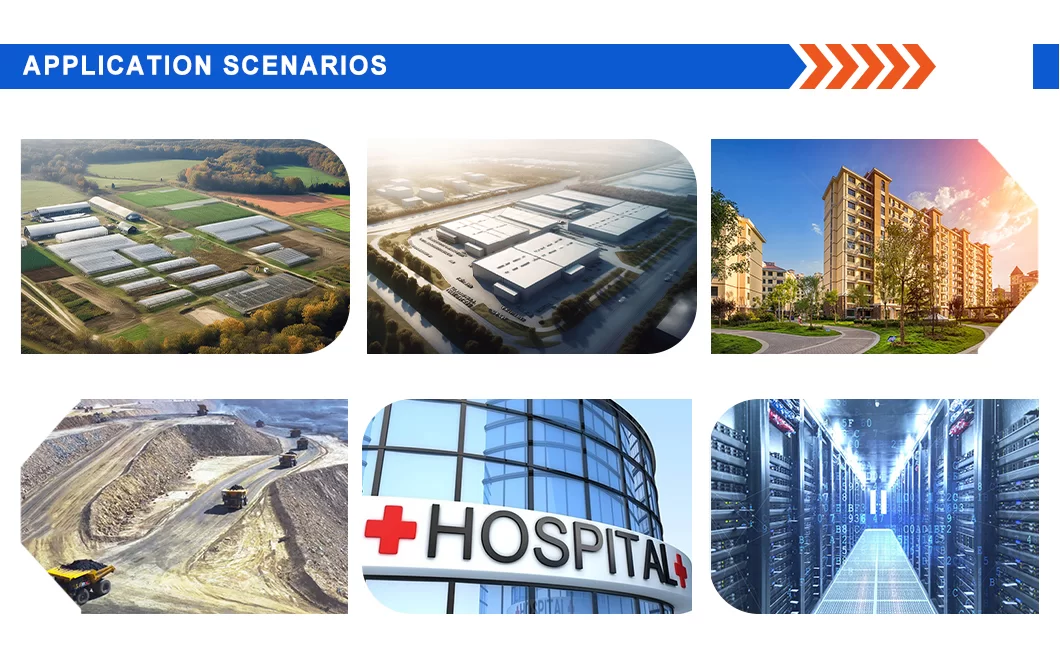
They serve as the backbone for hyperscale data centers, EPC heavy construction, mining excavation, islanded grid power, and critical municipal water treatment facilities.
Yes. Using marine-grade anti-corrosive paint processes and IP54+ sealing, they operate reliably in extreme conditions ranging from -30°C to +50°C.
Yes. Our OEM division customizes high-voltage output (e.g., 11kV/13.8kV), double-walled integrated fuel tanks, specialized fire suppression (CO2/NOVEC), and grid synchronization controls.
Prime-rated (PRP) models are designed for unlimited annual operating hours. Runtime is only limited by external bulk fuel replenishment schedules and standard maintenance intervals.
Yes. Multiple units can be paralleled (up to 32 units) to create modular power plants delivering 10MW to 50MW+ for utility and independent power producer (IPP) applications.
In heavily regulated zones, standard industrial enclosures are not sufficient. Our super-silent containerized generators integrate advanced aerodynamic noise mapping to deliver exceptional acoustic dampening.
These specialized units feature dual-layer rock-wool acoustic insulation, motorized louvers for controlled airflow, and heavy-duty residential silencers mounted entirely within the enclosure. This ensures strict urban compliance (e.g., <70 dB(A) at 7m) without compromising thermal rejection performance.
By significantly reducing decibel output, EPC contractors can support uninterrupted night-time operations in residential areas, while hospitals can deploy mission-critical life-safety power without disturbing patients.
In the data center tier classification model, Tier III and Tier IV facilities require fault-tolerant concurrent maintainability. Our Data Center Continuous (DCC) rated generators are built for this requirement.
Engineered with redundant starter motors, dual battery banks, and high-tier alternators capable of handling extreme capacitive loads from UPS systems, these units deliver reliable transient response during utility grid failures.
Deep PLC integration enables instantaneous synchronization, providing critical bridging power within 10 seconds of a mains outage to prevent catastrophic data loss and financial penalties.
For IPPs and mining conglomerates running base-load power, fuel is typically the largest component of lifetime OPEX. Our modern fleet uses High-Pressure Common Rail (HPCR) injection and advanced ECU mapping to achieve best-in-class fuel efficiency.
Engine derating is mitigated through efficient charge-air cooling. We strongly recommend that B2B customers operate continuous loads within the 70% to 90% band of rated capacity to prevent cylinder glazing and maximize the fuel-to-kilowatt conversion ratio.
Integrated telemetry systems transmit real-time fuel consumption data to centralized SCADA networks, enabling precise logistics planning for bulk diesel refueling in remote terrain.
Industrial downtime can cost millions. Moving from reactive repairs to predictive fleet maintenance is essential for efficient heavy equipment management.
By using integrated IoT sensors, fleet managers can monitor lube-oil pressure drops, coolant temperature spikes, and bearing vibration anomalies in real time. Oil sampling analysis and automated load-bank testing schedules help keep the engine block in peak readiness.
Maintaining the container’s structural integrity is equally important—inspecting door seals, verifying louver actuators, and testing automatic fire suppression panels to preserve the equipment’s lifecycle performance.
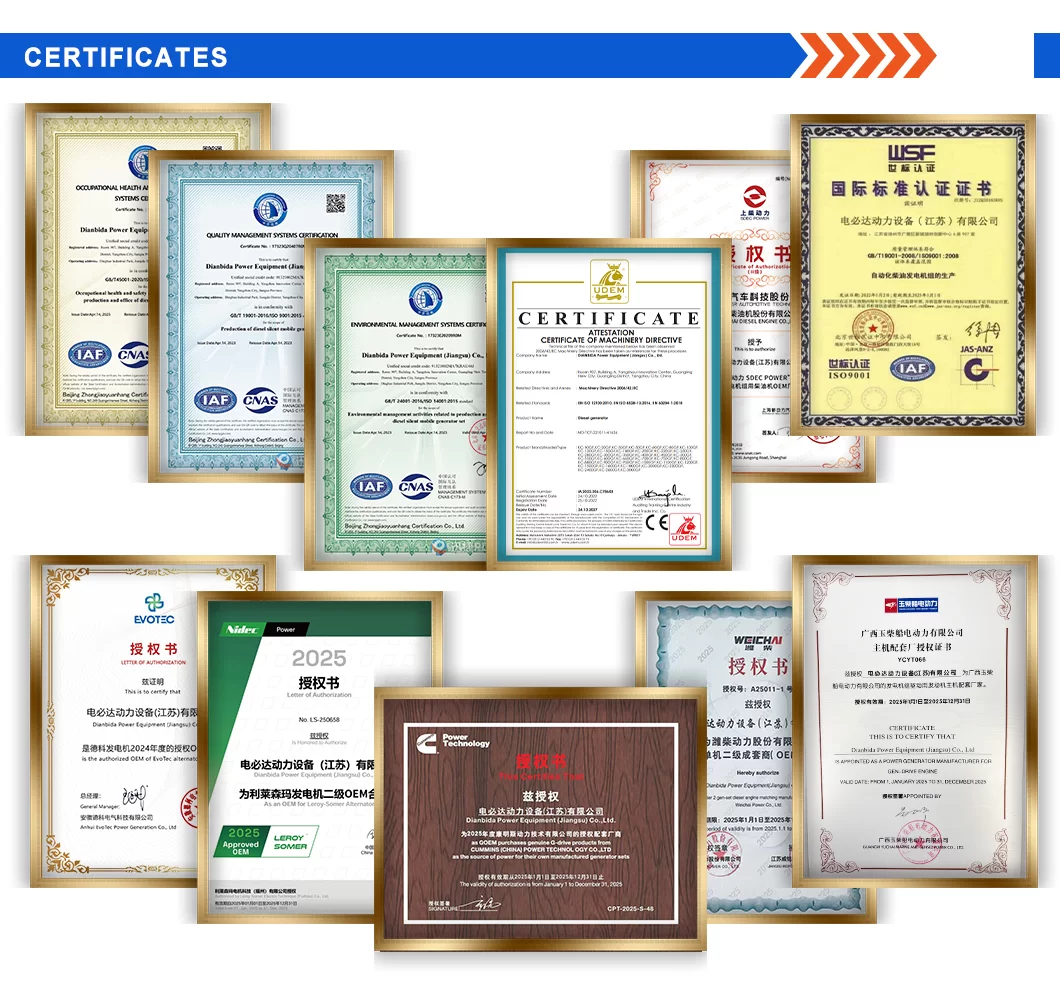
Industrial procurement requires strict compliance. Our containerized solutions are engineered in ISO 9001/14001 certified facilities and fully comply with applicable international directives.
Products include full CE declarations, UL compliance for critical switchgear components, and meet stringent IEC 60034 standards for alternator performance.
Safety architectures include automated emergency stop (E-Stop) circuits, fuel leakage bunding (110% environmental spill containment), and comprehensive earth-fault relay protections to safeguard on-site personnel and infrastructure.
Off-the-shelf solutions are often insufficient for megaprojects. Our application engineers provide end-to-end bespoke power solutions.
For the Oil & Gas sector, we integrate explosion-proof ATEX-rated components. For telecommunications, we incorporate hybrid-compatible DC alternators. For utility peaking power, we supply medium/high-voltage step-up transformers (e.g., 11kV or 33kV) installed directly within the container envelope.
Every unit undergoes a rigorous Factory Acceptance Test (FAT) simulating the exact load profiles of the client’s destination site.
Deep-vein mining and remote drilling operations run completely isolated from the utility grid. Containerized prime power units serve as the operational heart of these projects.
Engineered with dual-stage heavy-duty air filtration to address severe particulate ingestion, these generators support massive motor-starting loads for crushing equipment and heavy conveyor belts.
By integrating advanced micro-grid controllers, these units can seamlessly hybridize with remote solar PV arrays and BESS (Battery Energy Storage Systems), significantly reducing diesel dependence and logistics costs for isolated camps.
When extreme weather events or structural failures compromise national grids, rapid deployment of megawatt power is critical to stabilize affected regions.
The standard intermodal footprint allows government agencies and NGOs to mobilize containerized power modules instantly via military transport aircraft or heavy-duty flatbeds.
Featuring onboard cable reels, quick-connect Camlock distribution panels, and high-capacity internal fuel bladders, these systems restore essential electricity to pumping stations and medical command centers within hours of on-site arrival.
The heavy power generation sector is rapidly shifting toward decarbonization and digital twin integration.
Our next-generation containerized systems are engineered to operate on HVO (Hydrotreated Vegetable Oil) and synthetic drop-in fuels, reducing net carbon emissions by up to 90% without requiring hardware modifications.
Combined with AI-driven predictive maintenance platforms that analyze grid-load forecasts and engine telemetry, these smart energy nodes represent the future of sustainable, highly responsive industrial power.
The CAPEX for an industrial-grade containerized power plant is influenced by raw megawatt capacity, engine pedigree, alternator tier, and the complexity of custom paralleling switchgear.
While the initial CAPEX for a true prime-rated megawatt system is significant, institutional buyers should evaluate the Total Cost of Ownership (TCO). High-efficiency engines, 110% bunded fuel containment, and robust ISO structures substantially reduce OPEX across a 15–20 year lifecycle.