
Deploying heavy-duty power in noise-sensitive or remote environments often presents a conflict between raw energy requirements and strict acoustic regulations. For EPC contractors and industrial operators, the challenge is not just generating electricity, but doing so without disrupting surrounding operations or violating municipal decibel limits.
The shift toward integrated acoustic enclosures has transformed the standard generator into a specialized tool for urban infrastructure, mining, and emergency response. By encapsulating high-output engines within engineered sound-attenuating canopies, industries can now maintain critical power stability in zones where open-skid units are legally or practically prohibited.
Whether managing a deep-shaft mining operation or a hyperscale data center backup, understanding the technical trade-offs of a silent diesel generator is essential for optimizing project ROI and ensuring operational compliance.
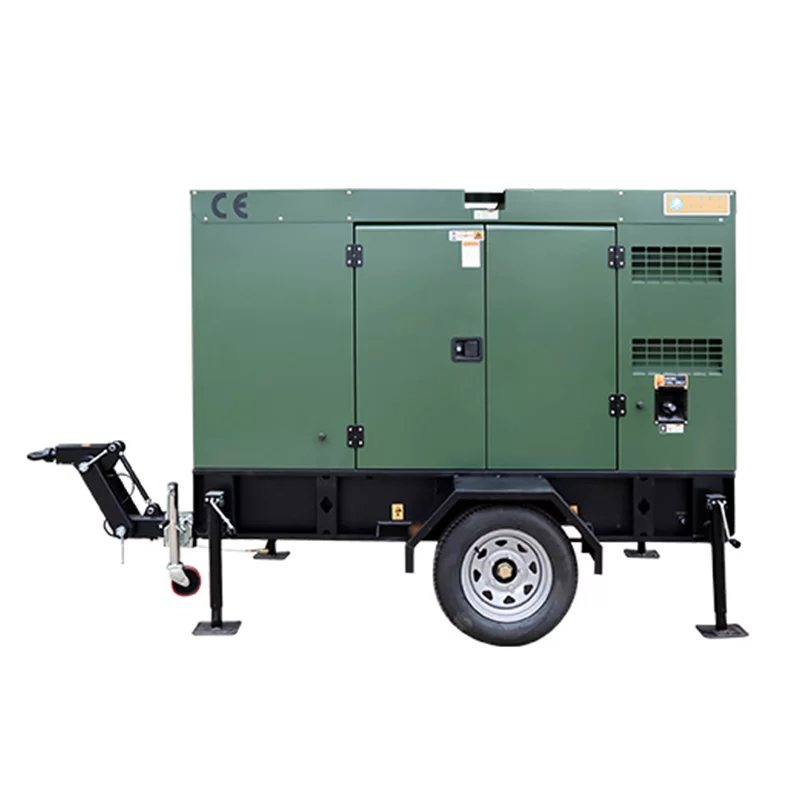
The Evolution of Acoustic Power Encapsulation
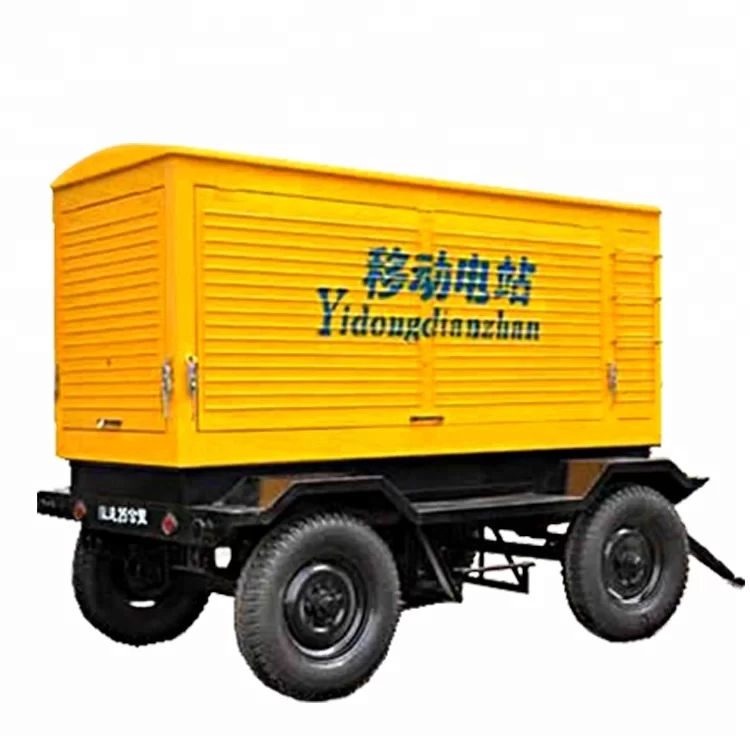
Historically, industrial power was provided by open-frame generators, which required dedicated sound-proof rooms or significant distance from operators. As urban density increased and environmental laws tightened, the industry pivoted toward the "silent" architecture—integrating the engine and alternator into a weather-resistant, sound-absorbing steel canopy.
Modern systems have evolved beyond simple boxes. They now incorporate precision airflow management to prevent overheating while maintaining acoustic integrity. This transition allows power plants to be placed directly adjacent to critical assets, such as telecom towers or construction cranes, without creating an untenable noise environment.
Engineering Mechanics of Sound Attenuation
Achieving "silence" in a heavy-duty diesel engine is a matter of managing three distinct types of noise: mechanical vibration, combustion roar, and exhaust discharge. To counter this, manufacturers use a multi-layered approach. The primary engine is often mounted on vibration-damping pads to prevent structural resonance from transferring to the chassis, which would otherwise turn the entire unit into a speaker.
The enclosure itself is the second line of defense. High-grade steel canopies are lined with fire-retardant, sound-absorbing foams that trap mid-to-high frequency waves. Strategic ventilation is critical here; air must enter and exit through "acoustic baffles" or labyrinths that allow cooling air to flow but force sound waves to bounce and dissipate before exiting the unit.
Finally, the exhaust system is modified with industrial-grade silencers. In the case of high-end units like the Cummins or Perkins series, these systems are tuned to the specific RPM of the engine (typically 1500 rpm for industrial prime power) to maximize decibel reduction without creating excessive backpressure that could degrade engine efficiency.
Mobility vs. Stationary Power Logic
Procurement teams often face a decision between containerized stationary units and trailer-mounted mobile systems. Stationary units are designed for long-term infrastructure, such as hospital backups or data center grids, where the priority is maximum capacity and integrated fuel storage.
The core value of a mobile silent diesel generator lies in its rapid deployment capability; the ability to arrive on-site and reach full load within minutes eliminates the need for heavy cranes and minimizes project downtime in remote sectors.
Mobile units require specialized engineering to survive transit. This includes reinforced steel chassis to resist torsional stress and high-capacity leaf-spring suspensions to protect sensitive alternator components from vibrational fatigue during off-road transport. This logistical agility makes them the standard for rental fleets and emergency disaster response.
Performance Metrics Across Power Scales
Industrial power is not a one-size-fits-all solution. The requirements for a 10kVA unit powering a telecom mast are fundamentally different from a 500kW plant supporting a mining operation. Small-scale units focus on extreme fuel efficiency and compact footprints, while high-capacity units prioritize thermal management and voltage regulation under heavy inductive loads.
When evaluating these systems, the "Prime Power" rating is the critical metric. This indicates the unit's ability to operate at a constant load for an unlimited time, provided it receives scheduled maintenance. The following index illustrates the relative operational focus as power capacity increases.
Figure 2. Operational Priority Index by Power Capacity
Sector-Specific Deployment Scenarios
In heavy civil engineering, the priority is often "plug-and-play" synchronization. Contractors deploying multiple units across a large site require intelligent AMF/ATS controllers that allow for remote monitoring and seamless load takeover. This prevents the "wet-stacking" that occurs when oversized generators are run at too low a load, which can lead to carbon buildup in the exhaust.
Conversely, in the telecom and data center sectors, the focus shifts toward 24/7 continuous runtime and extreme weatherproofing. IP54-rated enclosures become mandatory to protect internal electronics from salt spray in coastal areas or fine dust in desert environments. For these clients, the synergy of a Cummins engine and a precision-engineered canopy ensures that the power remains stable despite external environmental volatility.
Future Trends in Industrial Emission and Noise
The power generation industry is currently navigating a transition toward stricter global emission standards (such as Stage V and Tier 4 Final). This is forcing a redesign of the silent canopy, as modern after-treatment systems (like DPF and SCR) require more space and different thermal management profiles than older engines.
We are also seeing a rise in "hybrid" silent solutions. Some B2B procurement managers are now requesting units that can integrate with battery storage systems to allow the diesel engine to run at its most efficient load point, while the batteries handle peak spikes. This reduces both the noise profile and the total operational expenditure (OPEX).
Furthermore, the integration of SCADA-compatible smart controllers is becoming standard. The ability to monitor fuel levels, engine temperature, and noise output via a cloud dashboard allows fleet managers to optimize maintenance schedules and ensure that every unit in the field is operating within its legal acoustic envelope.
Selection Framework for B2B Procurement
Selecting the right power system requires a rigorous analysis of the load profile. Procurement teams must distinguish between "Prime" and "Standby" ratings; using a standby-rated unit for continuous prime power will lead to premature engine failure and voided warranties.
Beyond capacity, the metallurgical treatment of the canopy and the provenance of the alternator (such as Stamford or Leroy Somer equivalents) determine the asset's lifespan. A cheaper canopy may offer initial noise reduction but can succumb to corrosion in harsh industrial environments, eventually compromising the acoustic seal.
For those seeking a strategic partner, working with a manufacturer like Dianbida Power Equipment (Jiangsu) Co., Ltd provides access to ODM and OEM capabilities, allowing for customized voltage configurations and specialized weatherproofing that standard off-the-shelf units cannot provide.
| Feature | Silent Canopy | Open Skid | Industrial Impact |
|---|---|---|---|
| Acoustic Profile | Ultra-Low (Compliant) | High (Unshielded) | Municipal Compliance |
| Weather Rating | IP54+ (Outdoor Ready) | Low (Requires Shelter) | Installation Cost |
| Deployment Speed | Rapid / Immediate | Slow (Build-out Req.) | Project Timeline |
| Thermal Control | Managed Airflow | Natural Convection | Engine Lifespan |
| Asset Security | Vandal-Resistant Locks | Exposed Components | Risk Management |
| Typical Application | Mining / Urban Site | Indoor Plant Room | Operational ROI |
Questions & Answers
An industrial silent generator is defined by its integrated acoustic enclosure. Unlike standard open-frame units, it utilizes a precision-engineered steel canopy lined with high-density, fire-retardant sound-absorbing materials. This structure is designed to suppress both mechanical vibrations and exhaust noise, ensuring the unit meets strict dB(A) municipal and mining regulations while protecting the internal engine from dust, rain, and snow (typically IP54 rating or higher).
Procurement teams must analyze the total inductive and resistive load profiles. You should calculate the total starting current of your equipment (peak load) versus the continuous running load. For continuous operation, refer to the "Prime Power" rating rather than the "Standby" rating. Under-sizing leads to frequent outages, while over-sizing can cause "wet-stacking," where unburnt fuel accumulates in the exhaust due to low combustion temperatures.
Yes, provided they are engineered to road-worthiness standards. Professional mobile units feature reinforced steel chassis designed to handle torsional stress, integrated braking systems, and highway-standard lighting. The use of high-capacity leaf springs or torsion axle suspensions is critical to prevent the Cummins or Perkins engine components from suffering vibrational fatigue during long-distance transit over uneven terrain.
Pricing is primarily driven by four variables: output capacity (kVA/kW), engine provenance (e.g., global brands like Cummins vs. local reliable engines), the metallurgical quality and thickness of the sound-attenuating canopy, and the level of customization (such as ATS integration or extended fuel tanks). Bulk fleet orders typically trigger discount tiers based on the total volume and the complexity of the OEM/ODM specifications requested.
Yes, but it requires specific engineering. In extreme heat, the canopy must have optimized airflow and larger radiators to prevent heat soak. In extreme cold, block heaters and specialized low-viscosity lubricants are necessary. High-quality manufacturers provide altitude derating charts and temperature-specific configurations to ensure that the engine maintains its prime power output regardless of the ambient environment.
For rental agencies, OEM customization allows for a standardized fleet identity (branding/colors) and the integration of specific features that increase ROI, such as external fuel fill points, heavy-duty lifting eyes for crane transport, and remote SCADA monitoring. This ensures that the equipment is not only durable but also easy to manage across multiple job sites, reducing the need for on-site technicians.
Final Thoughts
The transition from simple power generation to sophisticated acoustic management reflects the broader industrial trend toward operational sustainability and regulatory compliance. A silent diesel generator is no longer a luxury but a mandatory requirement for projects operating in urban centers, sensitive ecological zones, or high-density construction sites.
By prioritizing the synergy between engine reliability, acoustic engineering, and logistical mobility, EPC contractors can secure their operations against power volatility while minimizing environmental impact. Whether through a standardized containerized plant or a highly mobile trailer-mounted unit, the focus remains on delivering resilient, compliant, and efficient prime power.