
Securing a reliable power supply in remote or industrial settings often comes down to the pedigree of the equipment and the capability of the supply chain behind it. For procurement managers, the challenge is no longer just about finding a unit that meets a kVA rating, but identifying a partner who can guarantee operational continuity under severe loads.
The shift toward high-efficiency, low-emission power generation has forced a re-evaluation of how industrial assets are sourced. With the integration of smart monitoring and stricter global emission standards, the role of a professional perkins generator supplier has evolved from a simple vendor to a strategic technical partner.
This article examines the technical benchmarks of industrial diesel generation, the total cost of ownership (TCO) logic, and the specific operational advantages of open-frame architectures in high-demand environments.
Engineering Foundations of Industrial Power
Industrial power generation is defined by the ability to maintain a stable voltage and frequency output while subjected to fluctuating loads. Unlike residential units, B2B equipment must be engineered for "prime power"—meaning it serves as the primary source of electricity for extended periods without the luxury of frequent shutdowns.
The core of this capability lies in the materials used. Reinforced cast-iron blocks and precision-forged crankshafts are not merely options but requirements for equipment intended to endure extreme temperatures and humidity. When sourced from a professional perkins generator supplier, these technical foundations ensure that the machine can withstand the mechanical stress of 24/7 operation.
Critical Technical Determinants of Durability
Durability in diesel generators is often misunderstood as simple "ruggedness." In professional engineering, it refers to the synergy between the cooling system, the fuel injection precision, and the structural integrity of the engine block. Advanced cooling systems are critical, especially in tropical or high-heat zones, where overheating is the primary cause of premature engine failure.
Furthermore, the adoption of high-pressure common rail fuel injection and optimized turbocharging has redefined combustion efficiency. These technologies allow for a more precise fuel-air mixture, which reduces carbon buildup and lowers the operational temperature of the cylinder head, effectively extending the service intervals between major overhauls.
Environmental compliance now acts as a proxy for technical sophistication. Systems that adhere to EPA Tier 4 or EU Stage V standards typically utilize more advanced after-treatment solutions and electronic control units (ECUs), which not only protect the environment but also provide the data necessary for predictive maintenance.
The Logic of Open Frame Architecture
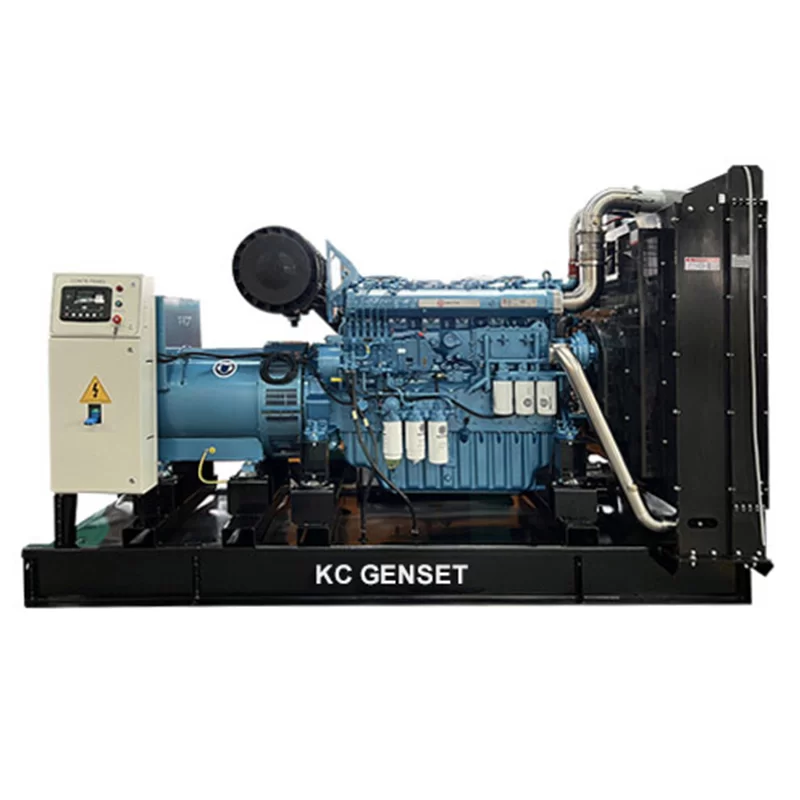
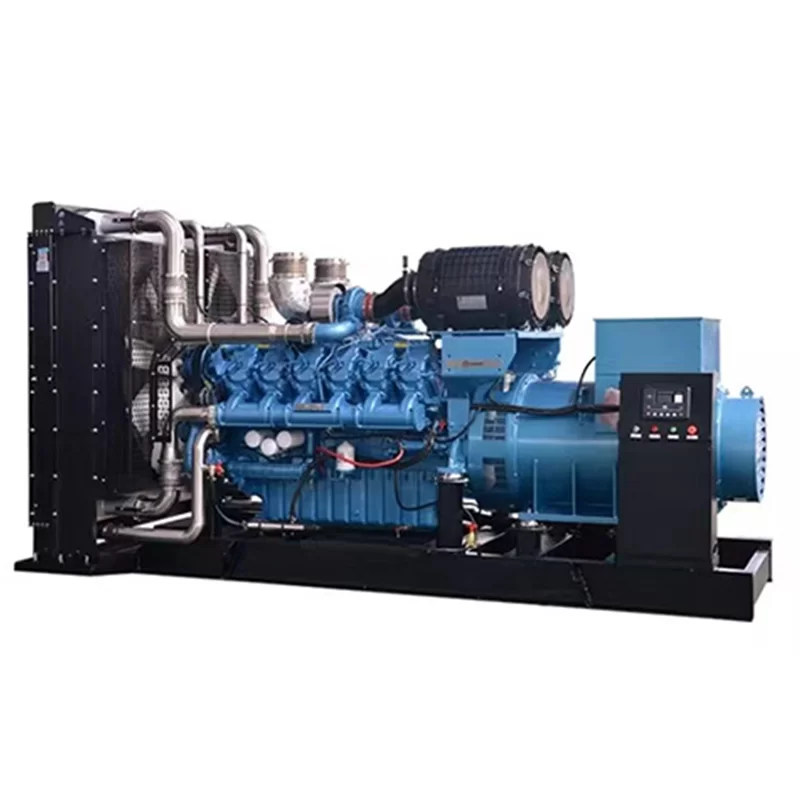
While silent canopies are popular for urban areas, the open-frame diesel generator remains the strategic choice for heavy industrial sites. The absence of an enclosure is a deliberate design decision focused on maximizing ambient airflow and streamlining maintenance access.
The open-frame architecture eliminates the thermal bottlenecks associated with soundproof enclosures, allowing for superior continuous cooling efficiency and reducing the time required for technicians to perform critical engine and alternator inspections.
From a logistical perspective, open sets are more compact and easier to transport in bulk. For EPC contractors deploying power to remote base camps or mining sites, the ability to rapidly access the control panel and radiator without removing panels significantly cuts operational downtime during the commissioning phase.
Assessing Total Cost of Ownership (TCO)
Experienced procurement managers prioritize TCO over the initial sticker price. The capital expenditure (CAPEX) is only the starting point; the true cost is found in fuel consumption, lubricant requirements, and the frequency of spare parts replacement over a 10-year lifecycle.
Using a qualitative index to evaluate the impact of different components reveals that the engine pedigree and alternator class have the most significant influence on long-term operational expenses (OPEX). Higher-grade components reduce harmonic distortion and optimize fuel burn, leading to compounding savings.
Figure 2. Impact of Component Quality on Lifecycle Value Index
Strategic Application Scenarios
The versatility of specific ratings, such as the 25 kVA open generator, makes them a staple for mid-sized industrial needs. In the telecommunications sector, these units are deployed as fail-safe redundancies for macro cell towers, where zero-latency communication is mandatory during grid failure. Similarly, in the agricultural sector, they power critical irrigation pumps and cold storage facilities, protecting high-value inventory from temperature fluctuations.
For EPC contractors, these generators are often used in "modular clusters." By deploying multiple synchronized units, they can scale power capacity up or down based on the current phase of construction, whether powering tower cranes or temporary field offices. This scalability ensures that energy expenditure remains aligned with project progress.
Future Trends in Power Generation Efficiency
The industry is moving toward "intelligent fleet management." The integration of cloud-based API diagnostics allows site engineers to monitor the health of a generator array from a central office, detecting early faults before they lead to catastrophic failure. This shift from reactive to predictive maintenance is drastically reducing the risk of project delays.
Another emerging trend is the adoption of dual-fuel capabilities. As global sustainability mandates tighten, the ability to switch between diesel and natural gas provides B2B clients with the flexibility to lower their carbon footprint without sacrificing the reliability of a diesel-based core.
Lastly, there is a growing demand for modularity. Future power nodes are being designed for rapid reconfiguration, allowing for scaled alternator capacities and customized base tanks that can be adjusted based on the specific tender requirements of a project, rather than relying on "one-size-fits-all" factory models.
Procurement Framework and Evaluation
When selecting a perkins generator supplier, the evaluation should focus on the supplier's ability to provide a comprehensive ecosystem, including genuine spare parts and localized technical assistance. A low purchase price is often offset by the high cost of importing parts during a breakdown.
A robust procurement framework analyzes the balance between the engine's displacement, the alternator's voltage regulation precision, and the controller's compatibility with existing ATS (Automatic Transfer Switch) systems. This ensures that the new asset integrates seamlessly into the existing infrastructure.
Ultimately, the goal is to secure a supply chain that offers OEM/ODM flexibility. The ability to customize the output voltage or frequency to match regional grid standards is a critical factor in avoiding expensive on-site modifications.
| Evaluation Factor | Prime Power Requirement | Standby/Backup Duty | Remote Off-Grid Site |
|---|---|---|---|
| Engine Block Material | Reinforced Cast-Iron | Standard Industrial | Heavy-Duty Alloy |
| Cooling System | High-Capacity Radiator | Standard Air-Cooled | Tropicalized Cooling |
| Control Interface | Remote API/Cloud | Local Digital Panel | Rugged Manual/Auto |
| Maintenance Cycle | Extended OEM Interval | Standard Schedule | Self-Service Optimized |
| Emission Standard | EU Stage V / Tier 4 | Regional Compliance | Flexible/Basic |
| Frame Design | Open Frame (Airflow) | Silent Canopy | Modular/Mobile |
Questions & Answers
An open generator is designed without an acoustic enclosure, which maximizes cooling airflow around the engine and alternator. This makes them ideal for high-heat environments and industrial sites where maintenance speed is more critical than noise reduction. They are typically used in engine rooms or remote areas where sound constraints are minimal but operational reliability is paramount.
Engine pedigree determines the structural durability and fuel efficiency. A premium industrial engine utilizes high-pressure common rail injection and forged components, which result in lower fuel consumption per kWh and longer intervals between overhauls. While the initial cost is higher, the Total Cost of Ownership (TCO) is lower due to reduced fuel spend and minimized downtime.
Beyond the price, managers should evaluate the supplier's global distribution network, the availability of genuine spare parts, and their OEM/ODM customization capabilities. A supplier that can tailor voltage, frequency, and fuel tank capacity to a specific tender ensures that the equipment will meet regional regulatory requirements and operational needs without costly field modifications.
Yes, provided they are rated for "Prime Power." Prime-rated generators are engineered to handle continuous loads for unlimited hours, provided they follow the OEM maintenance schedule. Their open architecture actually supports this role by preventing heat soak, which is common in enclosed units operating under continuous heavy load.
API diagnostics enable real-time monitoring of critical parameters like oil pressure, coolant temperature, and load balance via the cloud. This allows site engineers to perform predictive maintenance—replacing a part based on its actual wear data rather than a fixed calendar date—which prevents unplanned outages in mission-critical infrastructure.
Compliance with high emission standards requires advanced after-treatment systems and electronic engine controls. While this adds complexity, it generally results in more efficient combustion and better fuel mapping. For B2B clients, these standards ensure that the equipment is legally compliant across different global regions, facilitating easier export and deployment.
Final Thoughts
The transition toward more resilient and efficient power infrastructure requires a departure from simple price-based procurement. By focusing on the synergy between high-grade engineering, open-frame thermal efficiency, and a supportive global supply chain, enterprises can secure power assets that maximize ROI and minimize operational risk.
Whether deploying a single 25 kVA unit for a telecom site or a massive fleet for an infrastructure project, the value lies in the balance of durability, fuel economy, and technical support. Partnering with a qualified perkins generator supplier ensures that these technical requirements are met with precision, providing the stability needed for the world's most demanding industrial environments.